Wednesday, 30 September 2009

Sagano Bamboo Grove


The image of this path is used frequently to introduce Sagano, the Arashiyama area, sometimes as a whole Kyoto or even Japan. This little path is very, very popular not only with overseas but also domestic visitors. There are countless bamboo forests all over Japan, but this is especially favoured because of its serene atmosphere. Many people come to enjoy it, so many in fact the atmosphere is far from serene. –it might be quiet very early morning.


The sound of bamboo blowing the wind is very peaceful and pleasant, indeed.

Tuesday, 22 September 2009

Jojakko-ji Temple

Jojakko-ji Temple, Sagano, Kyoto
常寂光寺(京都/嵯峨野)

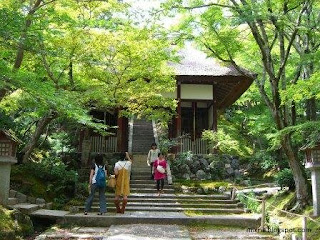
Spring and autumn are the best seasons to visit Kyoto. Some places are well known for cherry blossom and some for Japanese maples. This temple is a popular place for Japanese maples. It is notably praised for its picturesque hillside setting amongst the blazing reds of autumn.


Jojakko-ji Temple was originally the retirement place of a renowned monk. The land was said to be donated by a successful merchant and the structures were donated or transferred from a castle and temple. It shows how influential and respected he was.


The temple has a pretty cypress bark roofed Taho-to tower, a thatched Nio-mon gate and a small quiet garden. It may worth trying to visit during the maple season.

Saturday, 19 September 2009

Gio-ji Temple

Gio-ji Temple, Sagano, Kyoto
祇王寺(京都/嵯峨野)


Sagano has been known as a beautifully scenic place since the beginning of Kyoto’s history. It used to be a popular location for the Imperial family and aristocrats to own second homes and for anyone seeking seclusion, some still-active temples were founded a long time ago for that reason. Gio-ji Temple was one of those and is known for two historical figures who became nuns and spent the rest of their lives there. The temple is named after one of them.


The precinct is surprisingly small, but the temple is in bamboo forest and the garden is covered with moss, it’s very pretty and cosy.

Monday, 14 September 2009

Adashino-Nenbutsu-ji Temple

Adashino-Nenbutsu-ji Temple, Kyoto
化野念仏寺(京都)

The other day I took guests to Arashiyama and Sagano areas. We started at Adashino-Nenbutsu-ji Temple in Kiyotaki.

It is located in north east Kyoto and takes 40 minutes by bus from the city centre. Nowadays it’s easily accessible from the city but until 40 or 50 years ago it was a very quiet backwater.


According to the temple record a monk, Kukai, founded the temple about 1,100 years ago to repose deceased souls in the area. The custom had been to leave bodies randomly in the open without burial and this area was the designated area for leaving the bodies. Later burial became the common practice for disposal of the deceased but there were still no cemeteries and graves were scattered throughout the area. Over the years the graves were abandoned because there were no relatives or descendants to look after them. These abandoned, scattered tombstones (in this case pagoda-shaped or jizo statues rather than the western idea of tombstones) were gathered together in around 1903 and set in the temple in order to help the souls of those buried and forgotten throughout the area. The temple’s uniqueness is due to the resulting huge number of aligned stone statues and pagodas there –it is said over 8,000 of them .

On the 23rd and 24th of August a festival takes place in the temple called “Sento-Kuyo (千灯供養)”. “sen(thousand) to(light) kuyo (repose of deceased souls)”. The candle lights offered in front of the statues are to pray for the souls of the deceased who are now unknown.

The temple is located on a mountain and viewing cherry blossom in spring and autumn colours is enjoyable there. The place reminds us life and death are connected and like the changing colours of the seasons nothing is eternal.

Adashino-Nenbutsu-ji (Official/ Japanese)

Saturday, 12 September 2009

Shimogamo Shrine (2)

Shimogamo Shrine, Kyoto
下鴨神社(京都)

I’ve lived in Kyoto city nearly 10 years. Since I got involved in guiding overseas visitors, I’ve been to many places guiding and for research. There are more than 3,000 temples and shrines, many of them are not open to the public, it is impossible to visit them all, not that I intended to try it anyway.


Perhaps it’s surprising that in that time I’ve never visited such a well known shrine as Shimogamo. I always associate it with the Aoi (holyhock) festival which takes place in May and is one of the three major festivals in Kyoto along with Gion-Matsuri in July and Jidai-Matsuri in October. Though I thought it a must-see-place my daily routine makes it difficult to pop in. Anyway, it can be seen as a good example both of grandiose-scale shrine architecture and Shinto ritual practice.

I’ll tell you a little about Shimogamo Shrine.

The origin is unknown but it is one of the oldest shrines in the city and existed before the formation of Kyoto as a family shrine of indigenous Kyoto clan, Kamo. The official name is Kamomioya-Jinja (jinja means Shinto shrine), but nobody calls it that and uses the familiar name, Shimogamo-Jinja. Although the shrine is located in the centre of the city it still has a decent amount of woodland around it creating a pleasant atmosphere, enough to forget you are in the city centre. It is designated a World Heritage Site along with other temples and shrines in Kyoto.